
A decade prior, Australian Amber Bourke was in her mid 20s and hiking through Egypt when she found something surprising with regards to herself. In a little town on the Sinai promontory she ran over a spot that educated "free jumping" - submerged plunging with no breathing device - and chose to check it out.
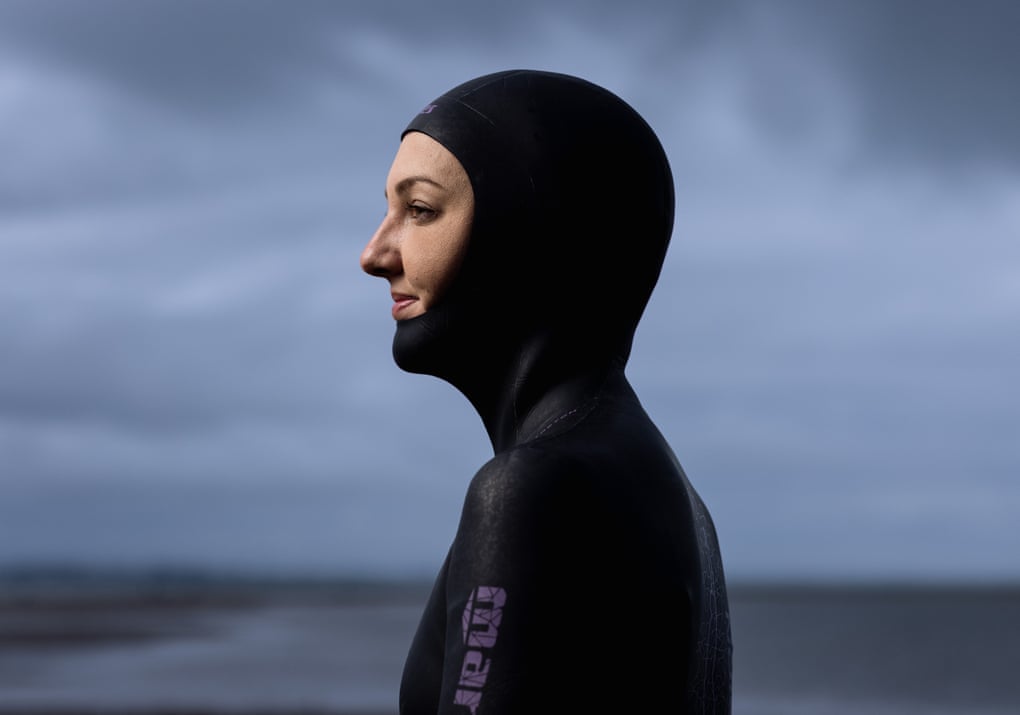
"I paused my breathing for four minutes and I pigeon to 18 meters," says Bourke, who is the current ladies' Australian pool and profundity freediving champion. "Also both of those things, I didn't understand was imaginable."
Bourke had been a boss synchronized swimmer when she was a youngster, so definitely realized she could pause her breathing for a very long time. Yet, finding free jumping "just woke me up to the potential outcomes … and I just got snared on a sensation of plunging further and needed to see what I was prepared to do and how profound I could go."
By 2018, Bourke had laid down a good foundation for herself as one of the most outstanding cutthroat free jumpers on the planet, and in profound waters off the shore of the Philippines, was prepared to endeavor to break the ladies' reality record in the discipline of "steady weight no balances".
Considered one of the most difficult types of the game, a jumper slides upward in profound water on a solitary breath, utilizing just muscle solidarity to push them downwards. With each meter of plunge, the compressive tension on the body expands, contracting the spaces that contain air. By 30 meters down - the most extreme profundity physiologists in the beginning of the game idea people were equipped for coming to - the tension applied on the body is multiple times more noteworthy than on a superficial level and the volume of air inside the body has contracted to one quarter. When negative lightness is reached, the jumper starts to freefall.
Bourke arrived at a profundity of 73 meters - a world record - yet a brief instant power outage once she arrived at the surface precluded her. "Assuming you stay submerged sufficiently long, there's consistently the opportunity that your oxygen will drop to a level where your cerebrum will choose to close down to shield itself from mind harm," Bourke says. "Along these lines, as it were, it's great … however disappointing toward the finish of a long plunge."
The men's reality record for "consistent weight no balances" is 102 meters, requiring four minutes and 14 seconds. With balances, it is 131 meters. For the discipline of "static apnea", where a contender doesn't plunge yet lowers themselves submerged, the longest breath-hold is 11 minutes and 54 seconds. At the point when 100 percent oxygen is taken in before the endeavor, the record is 24 minutes and 37 seconds.


